Chords & Scales
The app's built-in music-theory reference: browse any chord or scale for a diagram and audio, then pick up the ukulele and have the app listen while you actually play it.
Two tiles in the Practice Hub — Chords and Scales — open onto the same idea: a reference you can browse, and a coach that listens. Look up a shape, hear it played back, then pick up the ukulele and have the app tell you whether you actually played it. Most theory references stop at the diagram. This one sticks around while you practice.
Chord Library
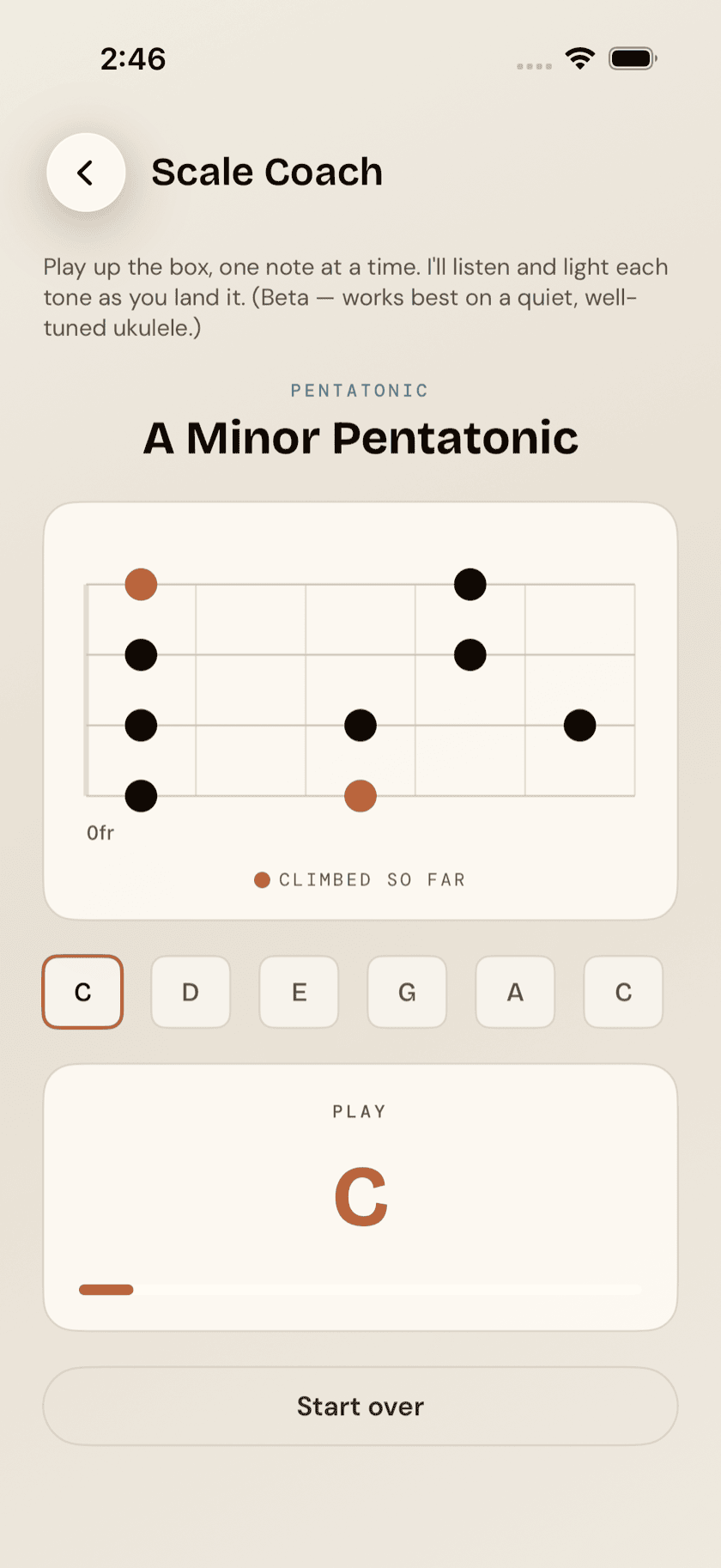
Browse by family first, then by root. Pick Major, Minor, Dominant, Suspended, Diminished, Half-diminished, Augmented or Power, then choose the root from a row of twelve — so Cm and Cm7 sit together, which they didn't back when one filter mixed neck position with chord quality. Every family has something at every root, and each thumbnail says which fret its shape sits at. If the tuner's set to baritone or D tuning, the whole library renames itself to match — the same shapes, called and played back as what they actually sound like, right down to the root row — with a line above the grid saying as much, so you're never left wondering why a C is being called a G. Your song sheets are left alone; a song's written C stays a C.
Tap any chord and its detail page opens with a full diagram, alternate voicings further up the neck for when the open or first-position shape isn't where you need to play it, and the individual notes that make up the chord. Three playback buttons — Strum, Arpeggio, Slow — let you hear it the way you're about to play it, or slowed down enough to catch every note. Underneath, a "commonly resolves to" suggestion points at the chord this one wants to move to — a V7 chord, for instance, points at the I chord it's built to resolve into. It's a small nudge toward hearing chord progressions as sentences instead of a pile of unrelated shapes.
Chord Finder
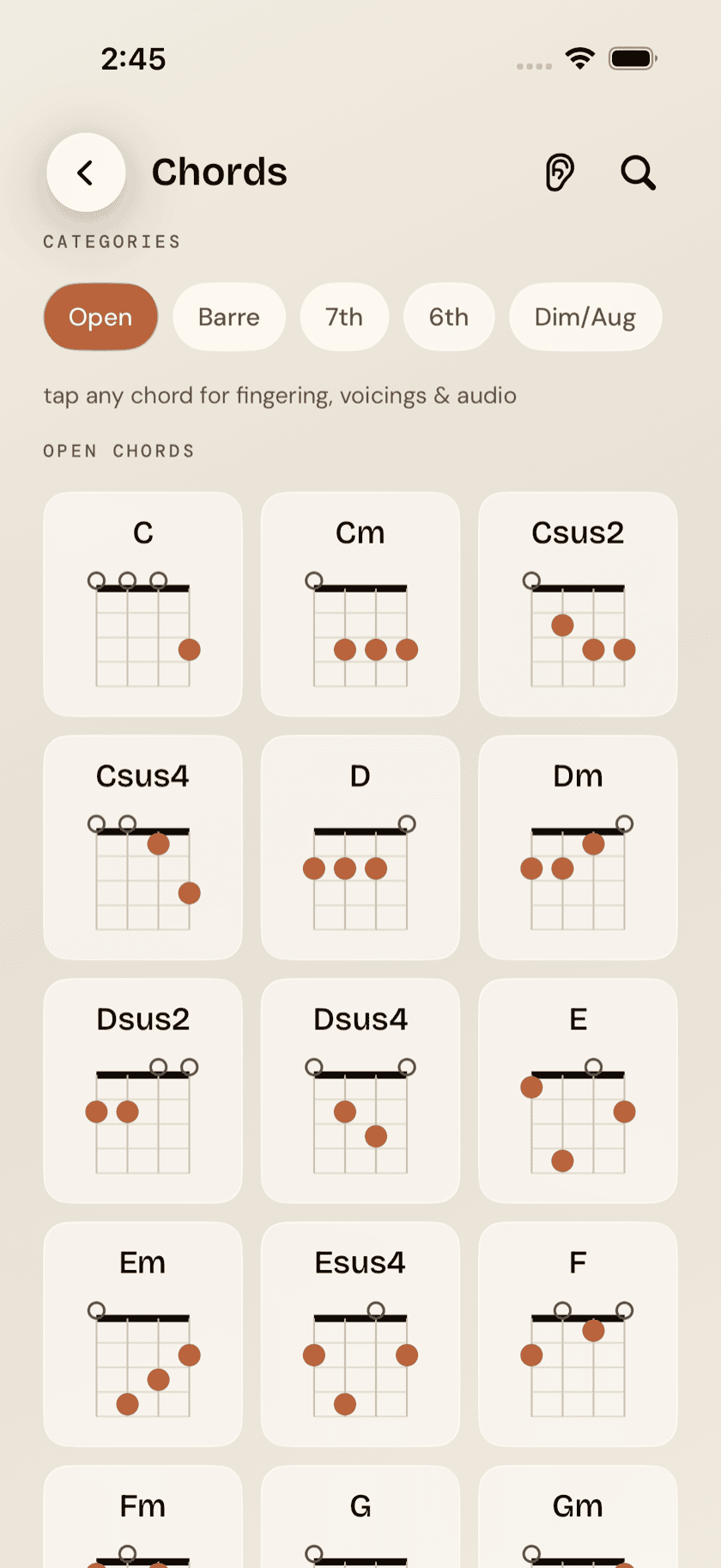
Chord Finder runs the lookup backward. The four string rows start muted; set the ones you're fretting — G, C, E, A on a standard uke, relabelled if the tuner's on baritone or D tuning — and once two notes are sounding the app names whatever chord you've built, with a matching diagram and a "hear it" button to confirm. It's for the moment you've got your fingers on a shape you half-remember and need to know what it's actually called.
Chord Coach
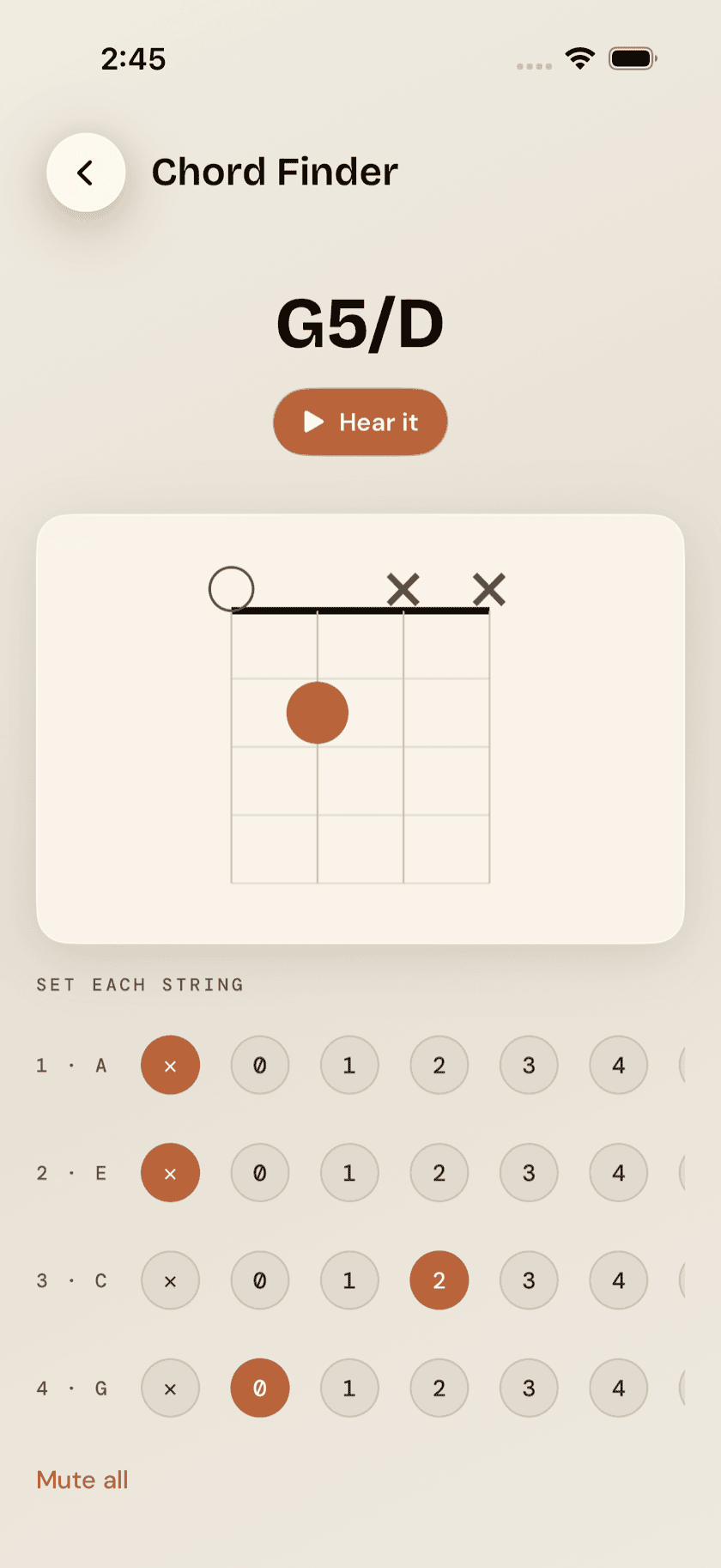
Pick a target chord and Chord Coach listens through the mic while you strum it for real. It gives you gentle feedback — root and major/minor family, not a note-by-note score — so you know whether you landed in the right neighborhood without the pressure of a grade. This is the part that separates Ukulele Buddha's reference from a static chord chart: it's practice, not just lookup.
Chord Coach checks the root and whether the chord reads as major or minor — it's not scoring every finger placement. The goal is a quick, honest checkpoint, not a pass/fail exam.
Scale Library
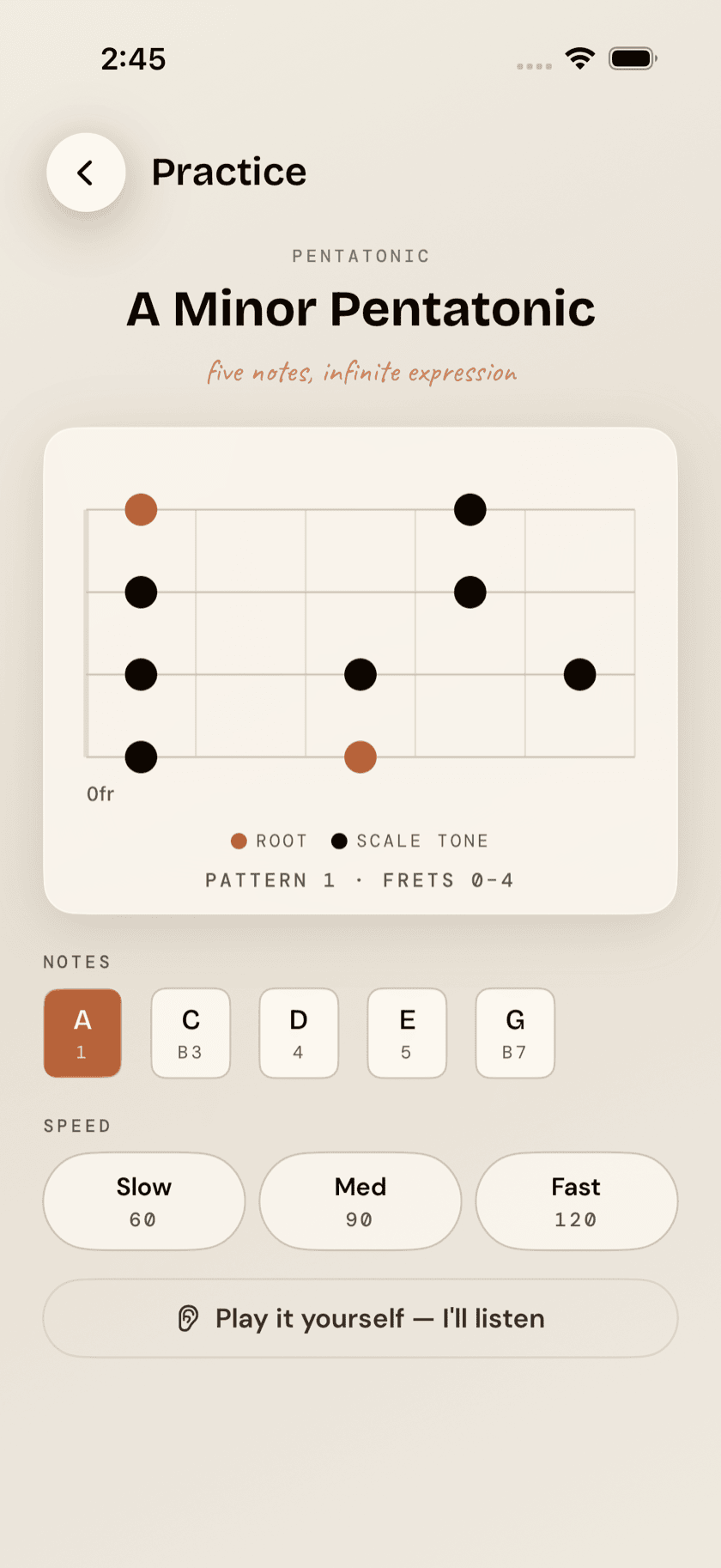
Scales browse by category — Pentatonic, Blues, Major, Minor, plus Harmonic and Melodic Minor, and Modes — in a filterable grid. Each detail page shows a fretboard box diagram with root notes highlighted and every note labeled by scale degree, so you're not just memorizing a shape, you can see what each note is doing inside it. Slow, Medium, and Fast playback let you hear the scale at whatever speed matches where you're at, and the whole neck unrolls below the box if you want to see where the scale lives past the fifth fret.
You can also build your own. Tap the +, pick a root, and tap the notes you want in the scale — the app works out the degree names, so you never type ♭3. A scale you build is stored as a formula exactly like a bundled one, which means it gets the same spelling, box diagram, neck map and playback, and it files under a Custom pill of its own.
Scale Coach
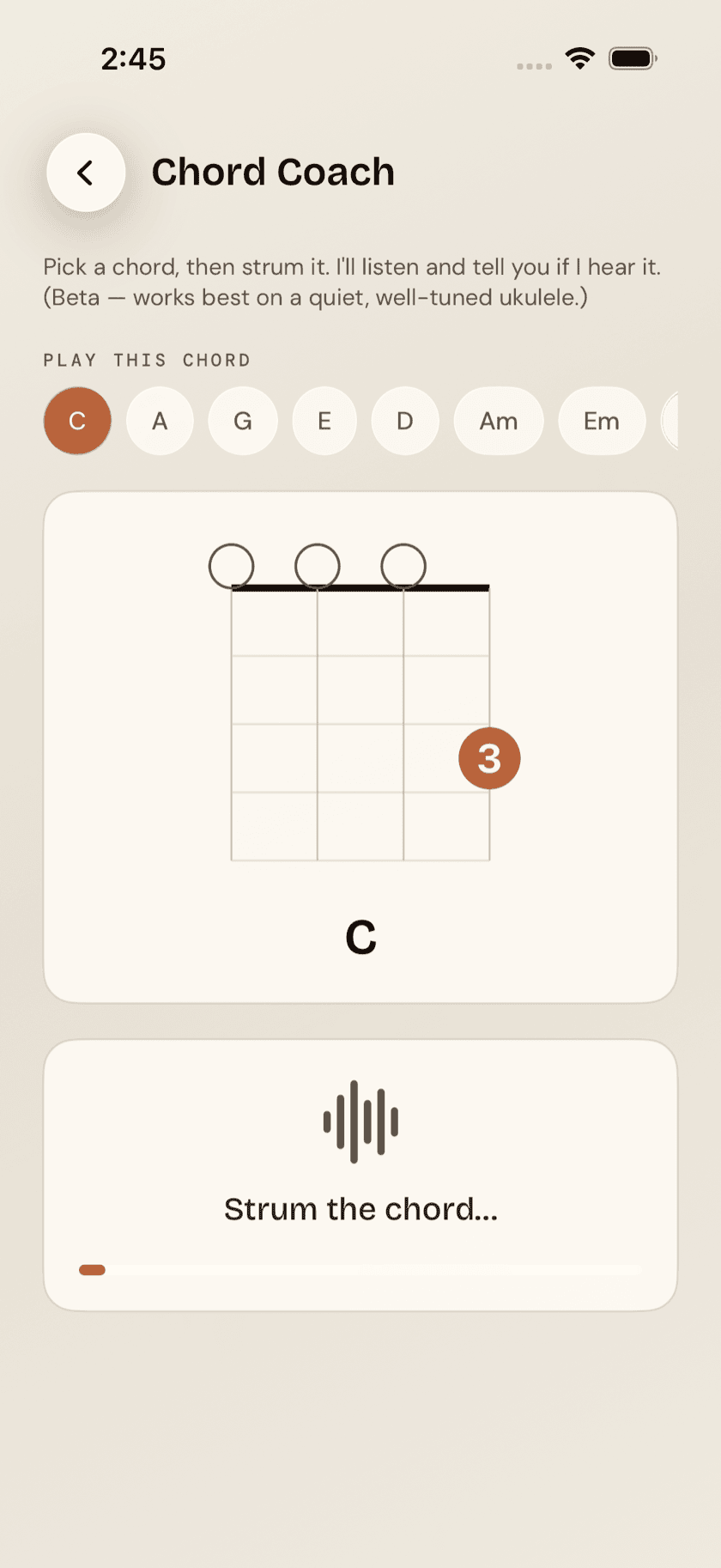
Scale Coach has you pick up the scale one note at a time, climbing the whole box in order while the app listens through the mic and lights each tone green as you land it. It's octave-agnostic and doesn't care what position on the neck you play from — hit the right note anywhere and it counts. That's deliberate: the goal is recognizing the scale's sound and shape, not pinning you to one fret.